
news
Rosa Flora’s Energy Management Is Growing Greener
February 25, 2026

As part of their commitment to support our environment, Rosa Flora is devoted to innovation in both what they grow and how they grow it. By opening up about their greener practices, they aim to be transparent about their journey, celebrate progress, and contribute meaningfully to conversations around sustainability in our industry.
Electricity
Efficient energy management is essential for both sustainability and operational success. As a Canadian producer of gerberas, lisianthus, and snapdragons, Rosa Flora is committed to using the most efficient and environmentally responsible electricity sources available.
Rosa Flora’s electricity comes from a diversified mix of natural gas cogeneration, wind energy, and the Ontario electricity grid. Their first cogeneration unit was installed in 1992, marking a decades-long focus on sustainable energy innovation. Cogeneration produces both heat and electricity simultaneously, reaching up to 95% efficiency. Nearly all the heat generated is captured and reused to warm greenhouses, manage humidity, and steam soil ahead of new crops. Even the carbon dioxide produced is redirected into the greenhouses to enrich plant growth.
Through its long-term energy partnerships, Rosa Flora also contributes power back to Ontario’s electrical grid, supporting local energy resilience and benefiting surrounding communities.
Heat
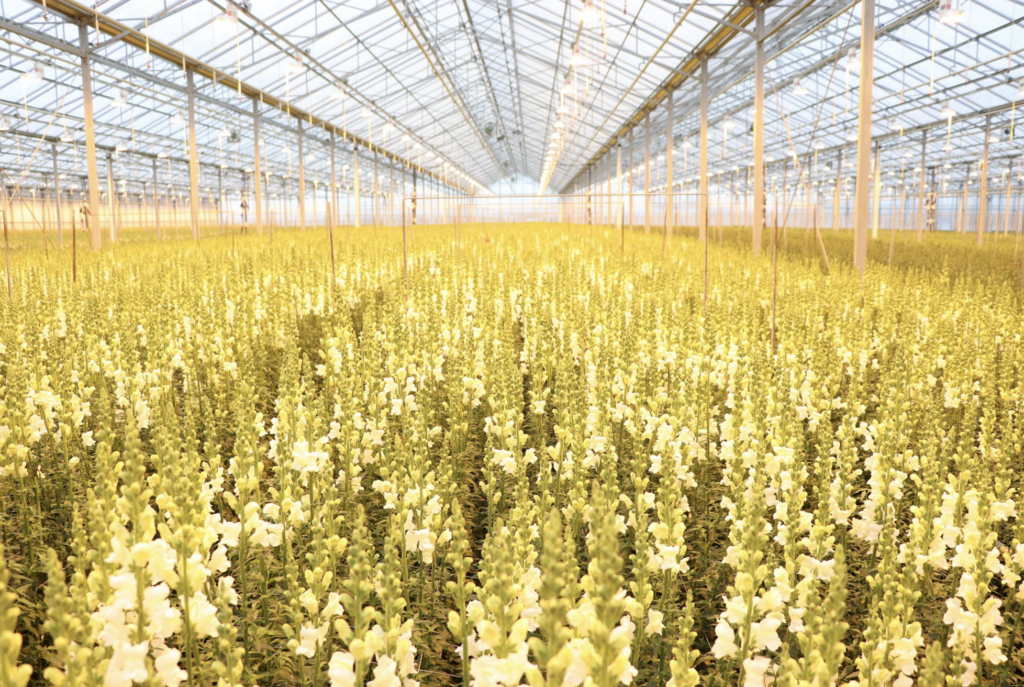
Efficient heat management is vital for greenhouse production—especially in Canada, where cold seasons dominate much of the year. During the bright summer months, Rosa Flora’s crops benefit from the sun’s natural warmth, with shade curtains used as needed to manage light intensity.
In the cool, dark winter months, heat is supplied through a hot water boiler system and natural gas cogeneration. A standard natural gas generator is only 40–45% efficient, but capturing and reusing the heat produced increases efficiency to as high as 95%. The cogeneration system also produces electricity, reduces crop humidity, and generates steam used to sterilize growing mediums.
Rosa Flora also uses biomass boilers that convert processed waste wood—such as discarded skids, tree trimmings, and residual lumber—into heat. By using the cast-offs of other industries, Rosa Flora supports a circular, sustainable energy approach.
Light
It’s no secret—without light, nothing grows. That’s why smart light management sits at the heart of flower production. During the bright summer months, Rosa Flora’s gerberas, lisianthus, and snapdragons thrive under natural sunlight. In the long, dark winters, high-efficiency grow lights supplement natural light to keep crops strong and healthy.

Rosa Flora uses both traditional HPS lighting and modern LED lighting. This dual approach ensures the right balance of illumination and heat for all stages of growth. Traditional HPS lights provide valuable radiant heat, while LEDs allow growers to target specific light spectrums ideal for different growth phases. This combination supports consistent, year-round production of colourful, high-quality blooms.
Managing light effectively and efficiently throughout the year allows Rosa Flora’s flowers to grow steadily, maintaining strength, color, and quality in every season.
Integrated pest management (iPM)
To guarantee the best quality and longest-lasting flowers across Rosa Flora’s greenhouse ranges, effective and responsible pest and disease management is essential. Integrated Pest Management (IPM) is the coordinated use of multiple control methods—biological, cultural, physical, and chemical—applied in that priority order and guided by regular monitoring. The goal is not to eliminate all pests, but to keep populations below damaging levels while reducing reliance on pesticides.
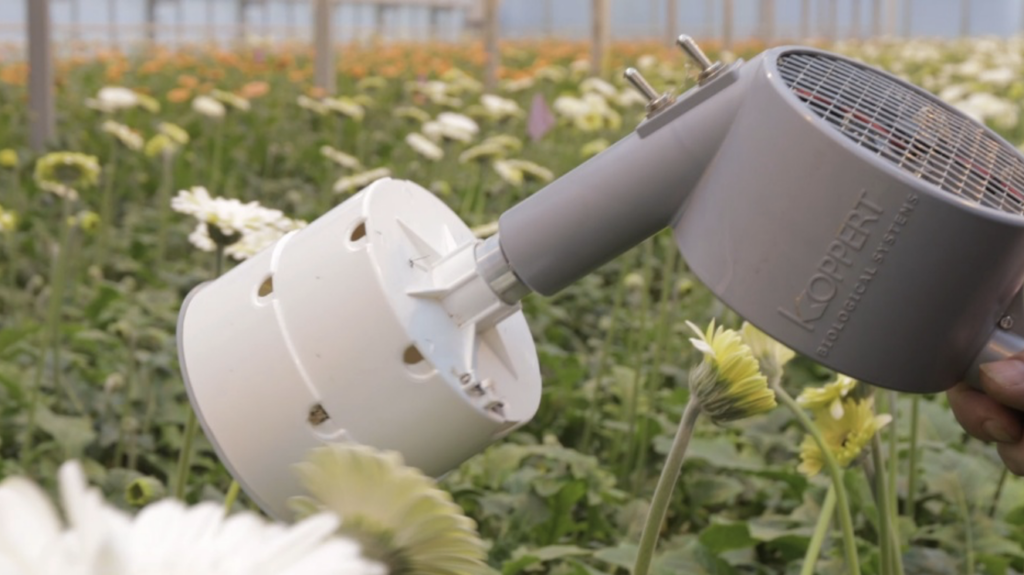
Prevention is a core principle of IPM. Before planting lisianthus and snapdragons, Rosa Flora steams the growing medium to remove harmful bacteria, diseases, and insect pupae. In the gerbera greenhouses, trained scouts inspect the crops weekly to identify emerging pest species and monitor insect populations. This monitoring allows growers to release beneficial organisms at the best stage of crop growth.
Another creative solution to pest pressure is the use of geckos, which feed on unwanted insects—a grower’s pest is a gecko’s feast!
Water
As the largest greenhouse cut flower grower in Canada, Rosa Flora places great importance on responsible water use. While Rosa Flora has access to abundant fresh water, they continue to take water stewardship seriously. Rosa Flora relies on sustainable water management to grow premium-quality flowers shipped across Canada and the United States. Rainwater is collected from greenhouse roofs and stored in freshwater retention ponds. When used for irrigation, this water is mixed with a precise amount of fertilizer to deliver nutrients directly to the plant roots—minimizing waste.
Any unused irrigation water is captured through a series of pipes, filtered to remove disease or unwanted inputs, and returned to the retention pond. It is then reused in a controlled blend of recycled and fresh water depending on the crop and time of year.
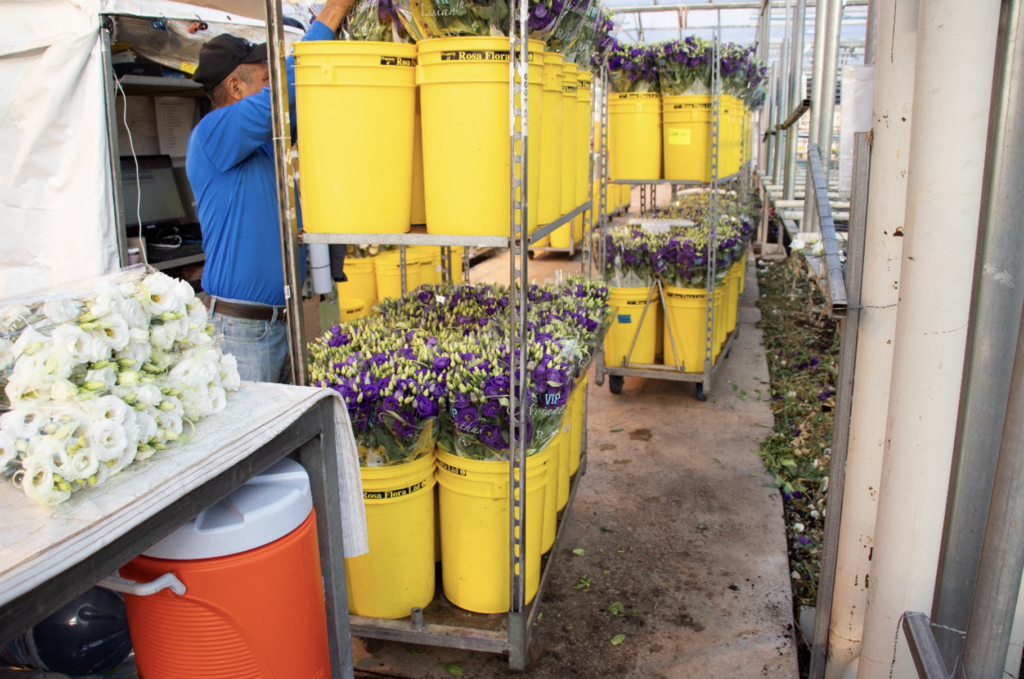
As part of their commitment to responsible water use, this stewardship continues beyond the greenhouse. Every wholesale order is shipped in Rosa Flora’s signature reusable yellow buckets (#yellowbucketclub), each filled with treated recycled water. This ensures that stems stay hydrated with the same thoughtfully managed water they were grown with—maintaining freshness during transport while extending our sustainability practices from the farm all the way to our customers’ coolers.

Rosa Flora is a Proud Supporter of Sustainabloom.


