
news
Resource Available for Integrated Pest Management
January 28, 2026
Pest management plays a big role in keeping floriculture businesses running smoothly. Without it, practitioners struggle with reduced quality, inadequate production, and disease. Integrated Pest Management (IPM) is a strategy that allows growers to handle effective pest control in a comprehensive manner, incorporating biological, chemical, cultural, and physical control methods..

Sustainabloom has called upon the expertise of researchers to help growers learn to implement IPM effectively in their practices. Through a detailed guide and supplemental resources, researchers Amanda Solliday and Dr. Melinda Knuth of the Department of Horticultural Sciences at North Carolina State University not only provide valuable guidance about IPM to growers but also explain how an effective strategy can lead to improved product quality and a more sustainable-friendly methodology for all industry professionals.
The guide and resources are part of a comprehensive, easily-accessible bank of research-backed educational tools that seek to clarify and simplify sustainability efforts in the floriculture industry.
Beginning Steps
Sustainabloom’s guide offers steps for growers to develop an IPM strategy. The information covers ways to reduce the usage of high-risk and costly pesticides and protect the health and vitality of flowers, which in turn, nurtures a sustainability culture in the industry and delivers a better product to the end customer.
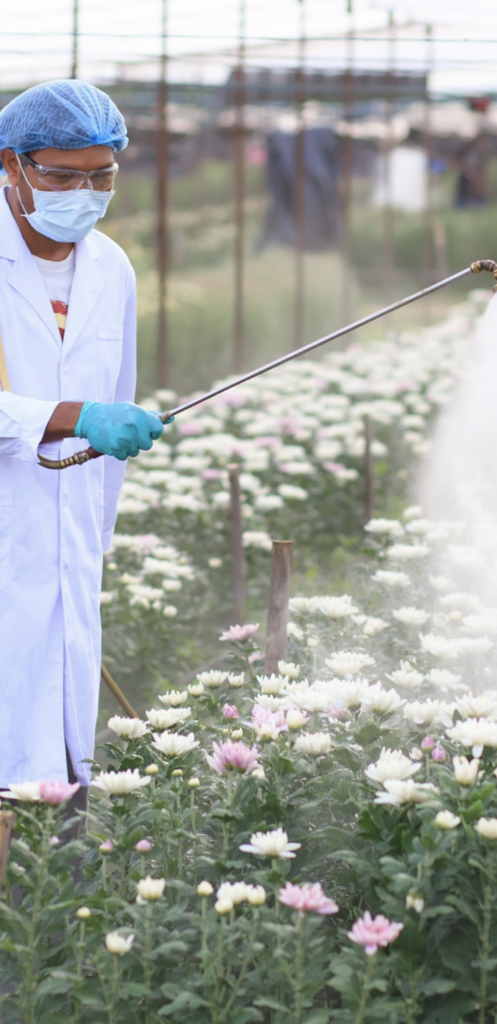
Solliday and Knuth have collected information that growers can find useful in beginning an IPM strategy. Those methods include identifying and monitoring pests, known in the industry as scouting. Growers can then determine the best approach depending on pest biology and other considerations. The researchers also share insights about protecting pollinators that benefit the grower.
The researchers have also provided information for growers about strategies they can implement to ward off infestations and continuously improve their IPM methods over time. The researchers note that growers can approach an IPM strategy one step at a time, building on their success or pivoting when needed. Through the guide, growers can learn effective ways to measure how well their IPM methods are working, including a review of their pesticide usage.
Real-World Examples
A valuable inclusion in Sustainabloom’s IPM guide is a first-hand account of how national ornamental producer Metrolina Greenhouses manages pests sustainably. Dr. Mark Yelanich, the company’s director of research, provides insights into how Metrolina masters scouting, implements natural predator practices, and capitalizes on certifications for effectively measuring pesticide usage.
The IPM guide is rounded out with links to resources including where growers can get more information about pesticide products, earn certifications, crop profiles, IPM strategies for greenhouses, and other useful information.


